Ulbrickson demotes the sophomores to junior varsity
The Boys in the BoatUlbrickson demotes the sophomores to junior varsity after a head-to-head trial exposes a decisive gap between Washington’s younger and older crews. The June 12 decision gave the varsity places to the older oarsmen and dealt Joe Rantz and his crewmates a severe blow, but the apparent clarity of the result was complicated by signs that the older boat was tiring over the full course. The demotion thus settled the lineup without settling whether Washington was ready to win the race that mattered most.
A high-stakes regatta
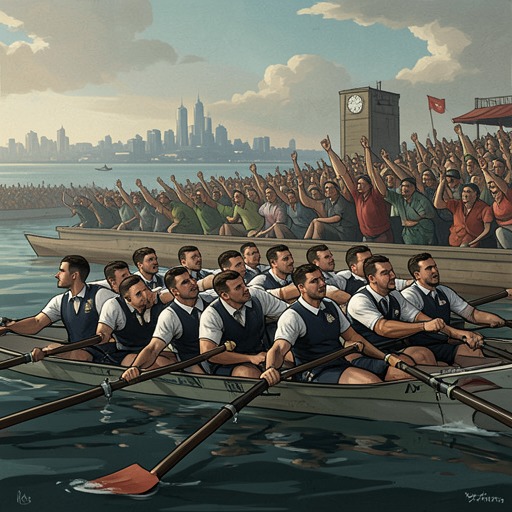
The decision came in the build-up to the Intercollegiate Rowing Association regatta at Poughkeepsie, a national rowing institution whose significance had grown over generations. American collegiate rowing began with the 1852 Harvard–Yale race, and by the early twentieth century the annual Poughkeepsie regatta drew crowds as large as 125,000, with millions more following radio coverage. In the 1920s and 1930s, crew could command attention alongside baseball and college football; prominent sportswriters covered the major regattas, and even a coxswain’s sore throat could make headlines.
That public attention sharpened the stakes for Washington. Eastern colleges had dominated Poughkeepsie, while western crews had to contend with costly travel and an atmosphere of condescension. Washington’s appearance in 1913, its first, produced a surprising third-place finish; in 1923, the university’s varsity won the regatta, giving the West its first Intercollegiate Rowing Association victory. But Washington had not won the varsity race at Poughkeepsie since 1926. Ulbrickson, who had stroked the Huskies to that victory, wanted the older crew to change that record.
The trial and the demotion
The immediate choice followed renewed pressure from California. Ky Ebright had moved four oarsmen from his previous year’s national championship crew into the California boat; in all, six of its rowers were veterans of that championship lineup. Sportswriters and bookmakers at Poughkeepsie were already comparing the reconstituted crew to California’s 1932 Olympic gold-medal team. Gene Berkenkamp, its stroke, was also being discussed as a formidable opponent. The prospect of facing such a boat made Washington’s own lineup decision especially consequential.
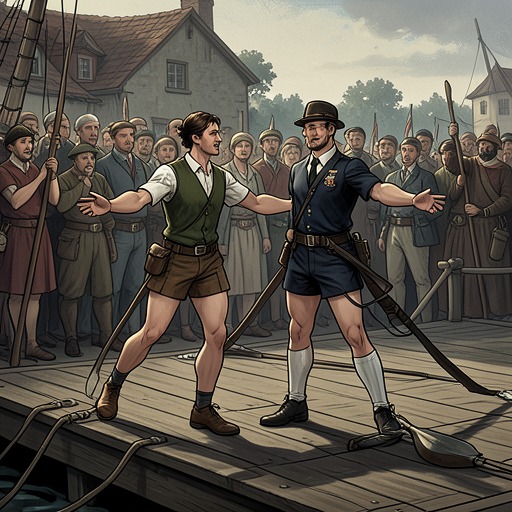
On June 12, six days before the race, Ulbrickson put the sophomores and older boys head-to-head on the river. The younger crew came apart as soon as its members saw the older crew and finished a staggering eight lengths behind. Ulbrickson then made the demotion official: the sophomores would row junior varsity, while the older boys would represent Washington in the varsity race. For Rantz and his crewmates, the result was a painful loss of status and opportunity. For Ulbrickson, the margin seemed to indicate that his selected varsity had the strength to pursue the championship.
A margin that did not tell the whole story
The eight-length result offered a compelling answer to the selection question, but it measured one trial rather than the full demands of the coming race. That same afternoon, The New York Times reporter Robert Kelley observed that Washington’s newly selected varsity seemed to drag in the fourth and final mile. Reporters in Seattle had noticed the same weakness earlier. The contrast was consequential: the older boys had overwhelmed the sophomores in direct comparison, yet their late-race slowing cast doubt on whether they could sustain that advantage over the full course.
The demotion therefore resolved the roster while preserving a sporting uncertainty. Ulbrickson had chosen the crew he believed most capable of winning the varsity race, but the evidence before him pointed in two directions: a dominant trial margin and a troubling loss of speed at the end. The decision was decisive for Rantz’s place in the lineup, not proof that Washington’s older crew had solved the harder problem of holding its pace against the national field.
Significance within western rowing
The episode sits within a contest shaped by more than the strength of individual boats. Collegiate rowing had a large audience, but its center of influence remained in the East; western universities had struggled for funding and recognition, and their annual rivalry drew tens of thousands without giving either school the resources or recruiting advantages enjoyed by eastern programs. Against that history, Washington’s Poughkeepsie campaign carried the hope of establishing western authority in a sport still identified with eastern institutions.
Ulbrickson’s choice narrowed that broad ambition to an immediate test: which Washington crew should carry the university’s bid for the varsity title? The sophomores’ defeat removed them from that contest, while the older crew’s late-mile weakness kept the outcome open. The scene’s tension lies in that split—an emphatic result in the trial, followed by evidence that the result might not hold over the distance that counted.